
"Uganda export volume"
90 article(s) found
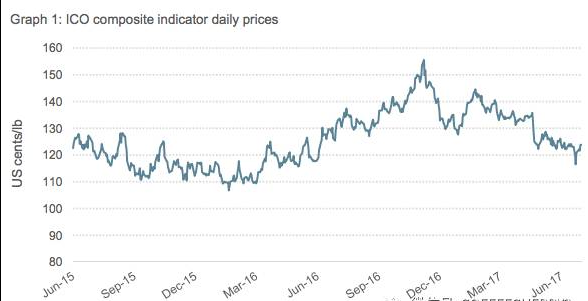
ICO 2017.6 Market report "Arabica prices are temporarily under pressure, Robusta benefits"
As the price of Arabica is as unstable as a somersault, the transaction price of Robustad rises. Total world coffee exports remained strong in June, with a total of 10.9 million bags, an increase of 8.8 percent over the same period last year and the highest stock reserves among all importing countries. So although there is a worrying possibility of a frost in Brazil in July,

The Central Mountains of Madagascar | the flavor of washed Arabica and Robusta coffee beans?
Professional coffee knowledge exchange more coffee bean information please follow the coffee workshop (Wechat official account cafe_style) Madagascar's Central Mountains | what is the flavor of washed Arabica and Robusta coffee beans? Producing area: the central mountain range of Madagascar. Altitude: 3600-4900 feet, natural organic pollution-free, fertile volcanic soil type. Environment: annual average temperature 24 ℃

Coffee + name + Origin of Ethiopian History
Coffee + name + History of Ethiopia Coffee is produced in many parts of Ethiopia, but the main producing areas are still concentrated in the Kafa and Hidamo areas in the southwest. Where the sea limit is between 11002300 meters, the precipitation is uniform during the growing period, the temperature is maintained between 1524 degrees Celsius, and most of the soil is weakly acidic soil with good drainage and rich humus, which is suitable for coffee.
Kenyan Coffee: another interpretation of good Coffee
Kenya is located in eastern Africa, the equator runs through the central part, and the East African Rift Valley runs through the north and south. It is bordered by Somalia to the east, Tanzania to the south, Uganda to the west, Ethiopia and South Sudan to the north, and the Indian Ocean to the southeast. 18% of the land area is arable land, and the rest is mainly suitable for animal husbandry. The whole territory is located in the tropical monsoon area, but affected by its higher topography, it is a savanna climate.

The flavor and taste of coffee in Berman Manor, Kenya, which is rich and perfect, features fine coffee and beans.
Kenya is 582646 square kilometers across the equator, bordered by Somalia to the east, Ethiopia and the Republic of South Sudan to the north, Uganda to the west and Tanzania to the south. The southeast is bordered by the Indian Ocean, and the coastline is 536 kilometers long. The Kenyan national emblem established in 1963 centers on a shuttle-shaped shield emblem consistent with the national flag, with a golden lion on each side, a spear and a limb.

Introduction to the rich taste of Kenyan boutique coffee bean flavor manor area
Kenya is 582646 square kilometers across the equator, bordered by Somalia to the east, Ethiopia and the Republic of South Sudan to the north, Uganda to the west and Tanzania to the south. The southeast is bordered by the Indian Ocean, with a coastline of 536 kilometers. [3] the coastal areas are plains, and most of the rest are plateaus with an average elevation of 1500 meters. Mount Kenya, the highest peak in the Great Rift Valley of East Africa

Introduction to the characteristics and flavor description of manor practices during Kenyan coffee picking season
The taste description of the manor practice during the Kenyan coffee picking season introduces that the Kenyan government takes the coffee industry very seriously, where it is illegal to cut down or destroy coffee trees. Kenyan coffee buyers are world-class high-quality coffee buyers, and no other country can grow, produce and sell coffee on a continuous basis like Kenya. All the coffee beans are first made from Kenya.

Introduction of Coffee Flavor characteristics in Africa Coffee producing area name and Coffee Flavor characteristics
When it comes to Africa, people's first impressions are: desert, drought, tribe, poverty, mystery and so on. Because of its climatic environment, it has become a paradise for the growth of coffee trees. Coffee is the main cash crop in Angola, the primary export of Burundi and the largest foreign exchange earning industry in Kenya in the past. Ethiopia is known as the hometown of coffee; C ô te d'Ivoire accounts for the world's coffee production

Flavor characteristics of Rwandan Coffee in Rwanda Kupec Cooperative (Rwanda COOPAC Coop)
Professional coffee knowledge exchange more coffee bean information please follow coffee workshop (Wechat official account cafe_style) Product name: Rwanda Kupek Cooperative (Rwanda COOPAC Coop) production area: Gisenyi altitude: 1500-1900 m soil: volcanic soil species: bourbon (Bourbon) treatment method: washing treatment Certification: fair Trade (FLO Fair Trade)

Main points of knowledge about coffee raw beans: introduction to the trade of coffee raw beans and text analysis of sack packaging
Previous blog post: the hometown of coffee once introduced that the main production places of coffee in the world are concentrated in the narrow strip with the equator as the center line and latitudes within 25 degrees from north to south, like a belt around the earth, commonly known as the coffee belt (Coffee Belt). Among the more than 60 producing countries in the coffee belt, except for the local consumption in Brazil, the exports of other countries account for a large proportion of the total output.

Description of Flavor during picking season of Coffee beans in Kenya introduction to Regional treatment of varieties produced by Grinding scale
Kenya coffee bean picking season flavor description grinding scale variety production area treatment method the ripening period of most Arabica coffee beans is from June to August and that of Robasta coffee beans is from September to October. Therefore, although in some countries where the dry and wet seasons are not obvious, such as Colombia and Kenya, there are two flowering periods a year, that is, two harvests, but strictly speaking, there is only one harvest a year.

Introduction to the characteristics of Kenyan Coffee Flavor Manor
Kenya is divided into seven provinces (PROVINCE) and one provincial special district (Nairobi province). The following provinces are divided into districts (DISTRICT), townships (DIVISION) and villages (LOCATION). Under the new constitution, the four-tier administrative structure will be changed to the central and county (COUNTY) levels. The 47 counties established under the new constitution will be officially operational after the 2013 general election. The seven provinces are: central Kenya

Fragrant and full-bodied taste of Kenyan coffee the introduction of fine coffee beans in the manor producing area
Kenya is divided into seven provinces (PROVINCE) and one provincial special district (Nairobi province). The following provinces are divided into districts (DISTRICT), townships (DIVISION) and villages (LOCATION). Under the new constitution, the four-tier administrative structure will be changed to the central and county (COUNTY) levels. The 47 counties established under the new constitution will be officially operational after the 2013 general election. The seven provinces are: central Kenya

World Map of Coffee beans-- introduction of 53 coffee producing areas in the world
twenty-one. Venezuela oil was once considered the main export of Venezuela (Venezuela). Although coffee trees were introduced from Martinique in 1730 and Venezuela, coffee production was almost abandoned at the height of the oil industry. Recently, coffee plantations have begun to recover, with original Tipica and bourbon coffee trees and new plantations

FLO Fair Trade in Rwanda | what is the flavor of COOPAC Cooperative Grade An in Kupec?
Professional coffee knowledge exchange more coffee bean information please follow the coffee workshop (Wechat official account cafe_style) Rwanda FLO Fair Trade | Kupec COOPAC Cooperative Grade A flavor? Almost all coffee in Lu is produced by small farmers. It is estimated that there are more than 500,000 small coffee farmers in the country, and most of the average area of each farm is less than one hectare. In addition, transportation is not

Introduction of boutique coffee beans in coffee flavor and taste area of Berman Manor in Kenya
Kenya is divided into seven provinces (PROVINCE) and one provincial special district (Nairobi province). The following provinces are divided into districts (DISTRICT), townships (DIVISION) and villages (LOCATION). Under the new constitution, the four-tier administrative structure will be changed to the central and county (COUNTY) levels. The 47 counties established under the new constitution will officially operate 582646 square kilometers of Kenya after the general election in 2013.

Is the coffee of Mongano Cooperative in Congo Cheever Coffee producing area good? How to brew Congolese coffee?
Professional coffee knowledge exchange more coffee bean information please follow the coffee workshop (Wechat official account cafe_style) Congo Cheever coffee producing area Mongano cooperative coffee is good? How to brew Congolese coffee? In Swahili, Muungano means unity, guiding farmers who are mainly used in Muungano coffee cooperatives. , Batembo and Rwanda are native to Congo-Congo East.
The main producing area of coffee knowledge coffee
Coffee production zones (commonly known as coffee belts) range from 25 degrees north latitude to 30 degrees south latitude, covering many countries in Central, West Africa, the Middle East and South Asia, the Pacific, Latin America and the Caribbean. The reason why coffee cultivation is concentrated in this area is mainly due to the limitation of temperature. Because coffee trees are vulnerable to frost, neither north nor south latitude is suitable, especially in the tropics.
A brief introduction to the cultivation of glossy Kenyan boutique coffee beans, geographical location, climate and altitude
Some buyers of Kenyan coffee, especially Japanese businessmen, have expressed dissatisfaction with the Kenyan coffee industry system. Some businessmen say that the quality of coffee in the country has declined, and point out that buying directly from farmers may be a way to improve the quality. But in any case, Kenya's detailed rules and regulations and sound procedures are worthwhile for all coffee-producing countries.
The mixing of coffee beans
The mixture of coffee beans people need to combine coffee from different places for several different purposes. The ideal goal, of course, is to piece together a coffee that tastes better than any of them. But generally speaking, Arabica coffee from a single origin is enough to make coffee that tastes good for export; it has a delicate flavor, a soft taste and a sweet aftertaste.